
Who looks after the yard in a Queensland rental? Lawns, trees, gutters and the bits in between
Yard maintenance is one of the most common flashpoints between tenants and owners, mostly because nobody wrote down who does what. Here is how it usually splits under Queensland tenancy rules, and how to structure it so your property stays presentable between inspections.
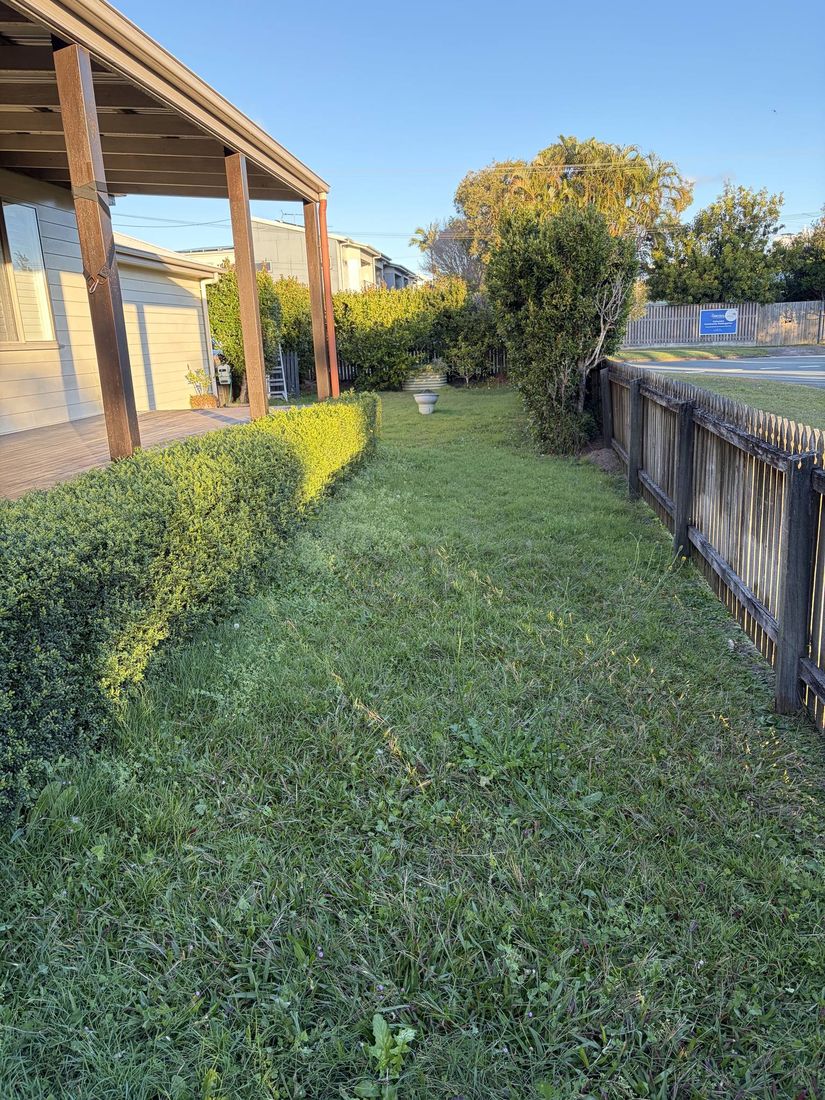
This is general information from a maintenance contractor, not legal advice. The Residential Tenancies Authority (RTA) publishes the definitive guidance for Queensland, and your property manager should be across it.
The basic split
Queensland tenancy law works on a simple principle: the tenant keeps the premises clean and doesn't damage them; the owner keeps the premises in good repair and fit to live in. Applied to the outside of a house, that generally shakes out like this:
- Usually the tenant: mowing and edging, weeding, watering, keeping paths and the yard tidy, basic hedge trimming they can reach from the ground, and putting the bins out. In other words, the routine upkeep that keeps the yard the way it was at the start of the lease.
- Usually the owner: tree pruning and removal, gutter cleaning, fence and retaining-wall repairs, irrigation systems, pest issues that aren't caused by the tenant, and anything that is really maintenance of the structure rather than day-to-day tidiness.
The dividing line most people use: if it's about keeping the place clean and as-presented, it's the tenant's; if it's about keeping the property sound, safe and maintained, it's the owner's.
Where it gets argued
- Large blocks and acreage. A tenant on a standard suburban lot can reasonably mow it. A tenant on a half-acre with slopes and a ride-on-sized lawn often can't — or won't, well. For those properties owners commonly include gardening in the rent, or supply equipment, and put it in the agreement.
- Hedges and shrubs that have grown beyond a tenant's reach. If it needs a ladder or a pole saw, it has usually crossed into owner territory.
- Gutters. Tenants will often say they'll do it and then not, because it's dirty work at height. Overflowing gutters damage eaves and fascia — your asset, not theirs. Most owners are better off scheduling it annually themselves.
- Trees. Anything involving a chainsaw, a ladder or a branch near a roof or powerline is not a tenant job, and on the Sunshine Coast some vegetation is protected under council rules, so removal may need approval regardless of who does it.
- "It was already like that." This is why the entry condition report needs proper photos of the yard, not just the rooms.
Put it in the agreement, then make it easy
- Photograph the yard at entry — every bed, the lawn, the fence lines, the gutters if you can. This is the standard you'll compare against at exit.
- Be specific in the special terms. "Tenant to maintain lawns and gardens" is vague. "Tenant to mow, edge and weed the lawn and garden beds; owner responsible for trees, hedges above 2 metres, gutters and fencing" is enforceable and fair. Your property manager can advise what special terms are permitted.
- Decide up front whether to include gardening. For high-maintenance properties, a fortnightly or monthly maintenance visit costed into the rent is often cheaper than the turnover, vacancy and re-establishment cost of a yard that's been let go for a year.
- Schedule the owner items on a calendar, not on complaints. Gutters before storm season (September–October), trees checked annually, fences checked at every vacancy.
A maintenance rhythm that works for Sunshine Coast rentals
- Every vacancy: full reset — clean-up, mow, edge, mulch, gutters, fence check, photos. This is your new entry condition report.
- Every spring: gutters cleared, trees and hedges cut back from the roofline before the storms.
- Every routine inspection: the property manager checks the yard against the entry photos and flags drift early, while it's a note and not a dispute.
- As needed: pressure washing, fence repairs, painting touch-ups — small jobs that keep the property looking like the one the tenant chose.
Maintenance spent on an investment property is generally treated differently for tax purposes than improvements; keep the invoices and ask your accountant how it applies to you.
Common questions
Can I make the tenant responsible for gutter cleaning?
You can propose it as a special term, but many owners choose not to: it's work at height, it protects your asset rather than the tenant's comfort, and it tends not to get done. Scheduling it yourself once a year is usually cheaper than repairing eaves.
Who pays for tree lopping in a Queensland rental?
Tree work is generally an owner responsibility because it's maintenance of the property rather than day-to-day cleaning. Some trees on the Sunshine Coast are protected by council rules, so check before any removal.
What should be in the entry condition report for the yard?
Photos of every garden bed, the lawn from several angles, fence lines, the driveway and paths, and the gutters where visible. It should be as thorough as the interior — it's the standard the exit is judged against.
Own a rental on the Sunshine Coast or in Moreton Bay? BrightHome does vacancy resets, scheduled maintenance, annual gutters and tree work, and fence repairs — with a photo report after every visit so you and your property manager can see it done.