
Storm season on the Sunshine Coast: the outdoor checklist to finish before November
South-east Queensland's storm season runs from roughly November to April. The damage usually isn't from the wind itself — it's from the gutter that was already full, the branch that was already dead, and the drain that was already blocked. September and October are the window to fix those.
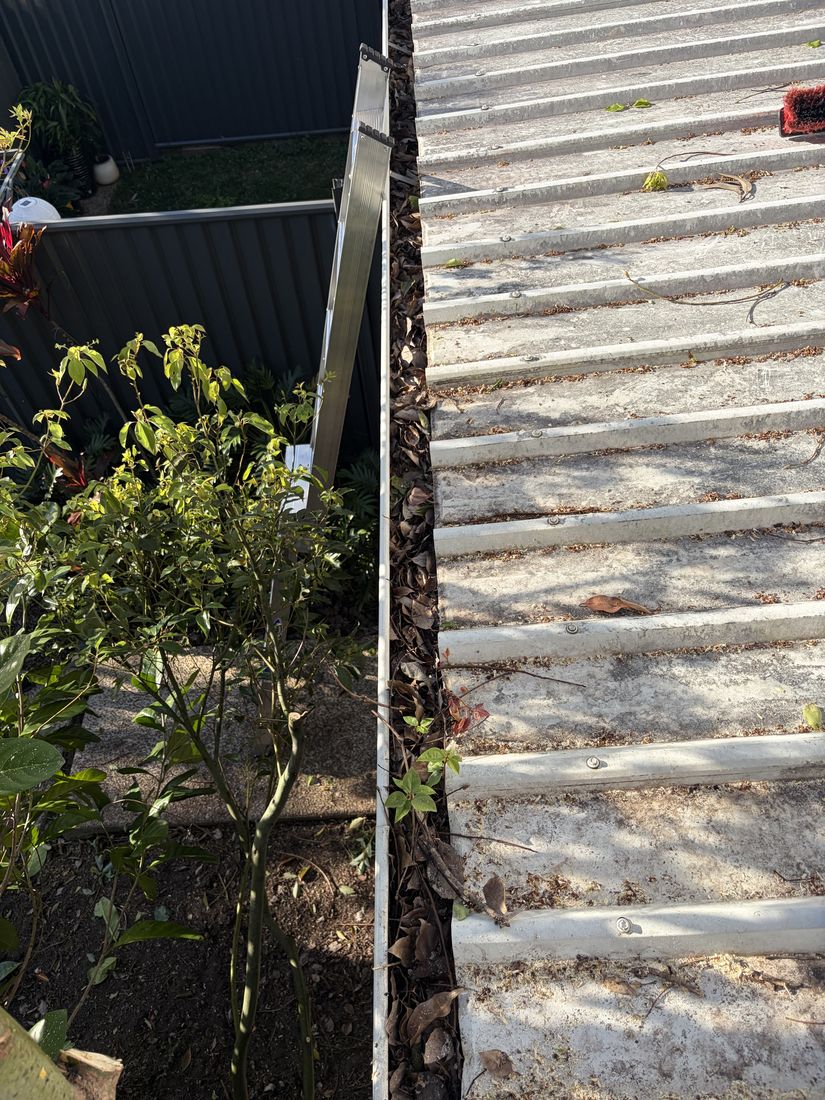
1 · Gutters and downpipes
A blocked gutter in a Coast storm doesn't just overflow at the edge — it backs up under the roof sheeting and into the eaves and ceiling. It is the single most common cause of avoidable storm damage we see, and the cheapest to prevent.
- Clear the gutters completely, including the corners and behind the downpipe outlets where the sludge settles.
- Check the downpipes actually run: pour a bucket in at the top and see it come out the bottom.
- Look at the falls. Standing water in a "clean" gutter means it's sagged or a bracket has gone.
- If the house is single-storey and you're steady on a ladder, this is a DIY job. If it's two-storey, over a pool or on a slope, it isn't.
2 · Trees, palms and overhanging branches
- Dead wood out. Dead branches are what come down first, and they don't need much wind.
- Clear the roofline. Anything overhanging the roof or gutters should be cut back — it drops the debris that blocks the gutters you just cleared, and it's what punches through tiles when it fails.
- Look for lean, cracks and fungus at the base. A tree that's shifted since last year needs a proper look, not a prune.
- Palm fronds and seed pods — remove the dead ones. A loaded frond is a heavy, sharp object in a 90 km/h gust.
- Never work near powerlines. Branches within reach of the service line to your house or the street lines are not a DIY job and not a general contractor's job either — that's a call to your electricity distributor or an authorised vegetation contractor.
- Check council rules before removal. The Sunshine Coast has vegetation protection provisions in some areas; pruning is generally fine, removal may need approval.
3 · Drainage and the yard
- Clear yard drains, grated pits and the stormwater outlet at the kerb. Leaf litter and mulch wash straight into them in the first downpour.
- Check where the water goes when the downpipes run hard: if it's toward the house, the slab or a neighbour, fix the fall or add a drain now.
- Pull mulch back from paths and drains so it doesn't migrate.
- Mow and clear before the season so a fallen branch isn't sitting on knee-high grass you can't see it in.
4 · Loose items and structures
- Trampolines, outdoor furniture, umbrellas, pots, kids' gear — anchored, stored, or accept they'll travel.
- Shade sails down for the season, or at least checked and tensioned. A loose sail takes its posts with it.
- Fences: loose palings, leaning posts, rusted Colorbond brackets. A fence that's already moving is a fence that will go.
- Sheds and gates latched and secure.
5 · Photos and paperwork
Insurers routinely reduce or decline storm claims where the damage was caused or made worse by lack of maintenance — blocked gutters and dead trees being the classic examples. Protect yourself:
- Photograph the gutters, roofline, trees and fences after the pre-season work is done, with the date visible.
- Keep invoices for gutter cleaning and tree work. They are evidence the property was maintained.
- Know where your policy documents and the claims number are before you need them at 11pm.
After a storm
- Don't go near downed powerlines or anything touching them — report them and keep clear.
- Check the roof from the ground first. Don't go up if it's wet or there's damage you can't see the extent of.
- Photograph everything before you move it.
- Green waste: a proper clean-up with the branches cut and removed, rather than a pile on the verge that sits for a month.
Common questions
When is storm season in Queensland?
Roughly November to April, with the most severe thunderstorms typically in the lead-up to summer. The preparation window on the Sunshine Coast is September to October.
How often should gutters be cleaned on the Sunshine Coast?
At least once a year, before storm season. Properties under gum trees, palms or near bushland often need it twice — spring and again after the summer leaf drop.
Will my insurer pay for storm damage if my gutters were blocked?
Many policies exclude or reduce claims where damage was caused or worsened by lack of maintenance. Clearing gutters, removing dead wood and keeping receipts and photos is the best protection.
Want it done before November? BrightHome does pre-storm gutter cleaning, tree and palm clear-backs, drain clearing and post-storm clean-ups across the Sunshine Coast and Moreton Bay — single-storey gutters, with before-and-after photos.